Introduction: In US procurement workflows, rapid triage of sensor/actuator cables saves engineering time and purchasing risk. This quick-spec snapshot lets engineers, buyers, and technicians screen part 1682812 before requesting the full datasheet for approvals. It focuses on electrical, mechanical, compatibility, procurement, and simple on‑arrival checks so teams can decide whether to request samples or proceed to purchase with minimal delay.
Introduction: Use this briefing as a one‑page decision tool: confirm form factor, shielding, jacket material, and length against system requirements, then request the full datasheet and test certificates for final acceptance. The intent is to enable fast pass/fail screening—never skip the full datasheet for final electrical or safety verification.
Product overview & key identifiers
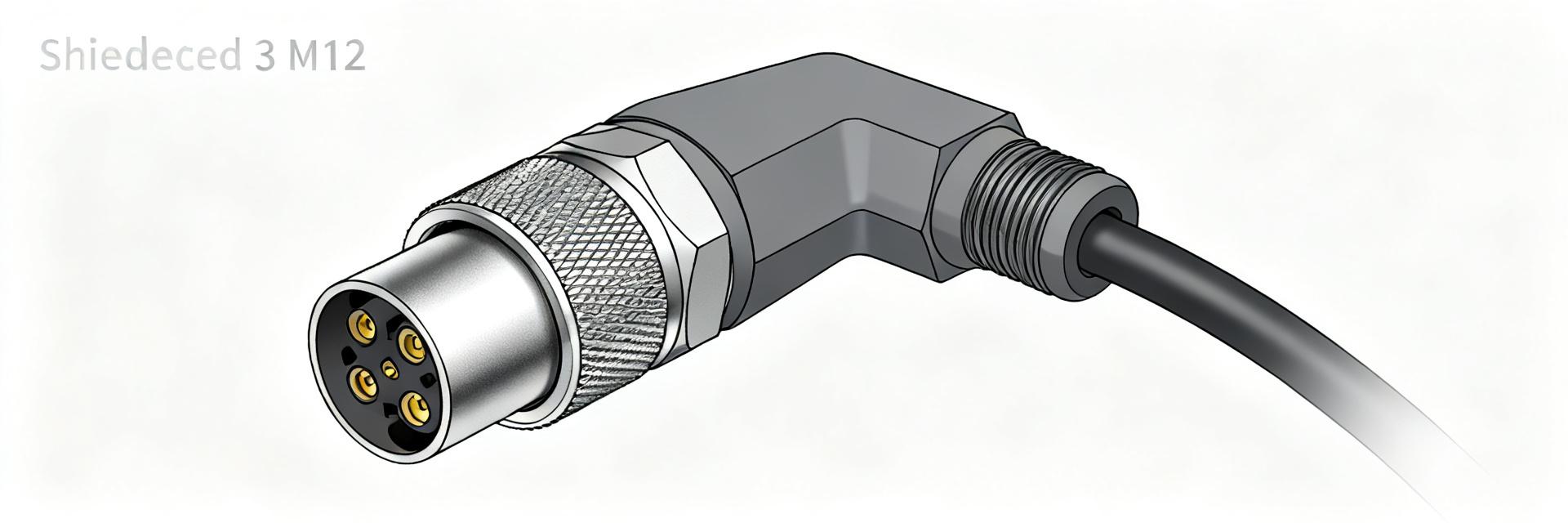
What 1682812 is (form factor & core identifiers)
1682812 is a 3‑position M12 right‑angle female sensor/actuator cable assembly, typically supplied in 1.5 m length and featuring a shielded construction with a PUR halogen‑free jacket. Minimum procurement identifiers: connector type (M12, female, right‑angle), pin count (3), cable length (e.g., 1.5 m), shielding (overall braid/foil), and jacket material (PUR, halogen‑free). Confirm variant suffixes for exact length and termination.
When to pick this part (common applications)
This cable fits sensor and actuator connections, factory I/O pre‑cabling, and machine vision pre‑runs where a 3‑pin M12 interface is required. Typical compatibility checks include system voltage/current class, mating connector gender/orientation, and environmental sealing. Choose this part when a shielded, halogen‑free PUR cable is required for industrial automation with right‑angle mating constraints.
- Compatibility checklist: match M12 coding/pin count, confirm right‑angle mating clearance, verify conductor cross‑section vs. load, check shielding termination method.
Quick specs at a glance — datasheet snapshot
Electrical specs (what to list)
Essential electrical fields to pull from the datasheet: conductor cross‑section (AWG or mm²), nominal current rating per contact, rated operating voltage, insulation resistance, contact material and plating, shielding type and continuity, and recommended fuse or protection class. Where values are unknown, request these exact datasheet fields from the supplier for side‑by‑side comparisons.
Mechanical & environmental specs (what to list)
Key mechanical/environmental fields: cable length and outer diameter, jacket material (PUR, halogen‑free), operating and storage temperature range, ingress protection rating of the mated assembly (e.g., IP67), minimum bend radius, and tensile strength. Note any flame‑retardant or halogen‑free declarations explicitly on the datasheet and request numeric ranges and units for each field.
How to verify compatibility for US deployments
Connector & wiring checks
Step‑by‑step verification: confirm M12 coding and pinout from the datasheet, check right‑angle vs. straight mating clearance, map conductor colors to system wiring diagrams, and verify shielding termination method (drain wire, braid). Use the following pinout template and fill with datasheet values before installation.
| Pin | Signal | Color | Verification |
|---|---|---|---|
| 1 | +V | Brown | Continuity to +V source |
| 2 | Shield/Drain | Shield | Continuity to chassis/shield |
| 3 | 0 V | Blue | Continuity to 0 V |
Installation & EMI grounding best practices
Route signal cables separate from high‑current power runs; maintain recommended minimum bend radius; avoid tight clamps at the connector back‑shell. For shielding, choose single‑point grounding at the controller for long runs, or continuous grounding for segmented EMI control, and secure strain relief to prevent conductor fatigue. Post‑install tests: continuity/shield check, visual inspection of mating, and a powered functional test with monitoring for noise or voltage drop.
Procurement snapshot: buying, cross-references & variants
Purchase checklist for fast buys
- Exact part number including length/variant and any suffixes
- Required quantity and packaging unit (reel, bulk, single)
- Lead time and available stock confirmation
- Country of origin and customs classification
- Applicable declarations: RoHS and halogen‑free statements
- Requested documentation: full datasheet PDF and test certificate
Cross-reference & substitution considerations
When evaluating substitutes, match pin count, connector gender/orientation, shielding construction, jacket material (PUR vs. PVC), and mechanical ratings. Never assume pinout parity—confirm pin mapping against the datasheet. Paste this RFQ sentence to suppliers to demand confirmation against the datasheet.
RFQ template: “Please confirm part number, full datasheet, and that pinout, shielding termination, jacket material, and electrical ratings match the specified 1682812 datasheet before shipment.”
Next steps & post-purchase verification
Ordering & receiving tips
Order a sample quantity when using a new vendor, request the full datasheet PDF and any available test reports before production orders, and confirm warranty/return terms. Ask the supplier explicitly for a certificate of conformity and an electrical test report for the batch when requesting acceptance documentation.
Basic inspection & functional tests on arrival
Quick arrival checks: visual inspection for jacket or connector damage, continuity test on each conductor, shielding continuity to drain wire or braid, and a controlled mating test with the intended connector. Use this short QA log template for sign‑off and mark pass/fail for each test item.
| Test | Result (Pass/Fail) | Notes |
|---|---|---|
| Visual: jacket & connector | Pass | |
| Continuity per conductor | Pass | |
| Shield continuity | Pass | |
| Mating functional test | Pass |
Summary
- Confirm the 3‑position M12 right‑angle form factor, selected cable length (commonly 1.5 m), shielded construction, and PUR halogen‑free jacket before advancing to sample or bulk purchase.
- Use the datasheet fields listed above—conductor cross‑section, nominal current, voltage rating, insulation resistance, and IP rating—to verify electrical and environmental fit for the intended application.
- Follow the procurement checklist, request the full datasheet and test certificates, run the on‑arrival inspection and basic continuity/shielding tests, and document QA sign‑off before committing to larger orders.
Frequently Asked Questions
Is 1682812 suitable for sensor wiring in harsh industrial environments?
Yes—when the application requires a shielded M12 cable with a PUR halogen‑free jacket and the datasheet confirms the specified temperature and IP ratings. Verify the operating temperature, bend radius, and IP rating on the datasheet to ensure the assembly meets the site’s environmental demands.
How do I request the full 1682812 datasheet and test certificates from a supplier?
Use a concise RFQ line: request the full datasheet PDF, batch test certificate, and confirmation of RoHS/halogen‑free status. Ask the vendor to confirm pinout and shielding termination against the datasheet before shipment to prevent mismatches on arrival.
What quick tests should QA perform on incoming 1682812 parts?
Perform visual inspection for damage, continuity tests for each conductor, shielding continuity to chassis/drain, and a mating functional test with the intended connector. Record pass/fail results in the QA log and hold shipments if any test fails until resolved.
What is the standard pinout configuration for the 1682812 M12 connector?
The standard 3-position mapping is Pin 1 to +V (Brown wire), Pin 2 to Shield/Drain (Shield termination), and Pin 3 to 0 V (Blue wire). Always confirm continuity mapping against your system wiring diagram and the specific vendor datasheet before deployment.


