According to the official product datasheet, the 1682702 SAC-3P-M12MR is a shielded, 3-position M12 right-angle sensor/actuator cable commonly supplied as a 5.0 m (16.4 ft) PUR-jacketed lead. This introduction frames shielding construction, signal characteristics, and ratings so a US engineering reader can evaluate the part quickly and consistently.
The assembly is listed on the official datasheet as a 3-conductor right-angle M12 assembly with overall shield and PUR outer jacket; the datasheet is the authoritative source for exact voltage, current, and IP values and should be quoted verbatim when specifying or testing the item.
1 — Product overview & key identifiers (Background)
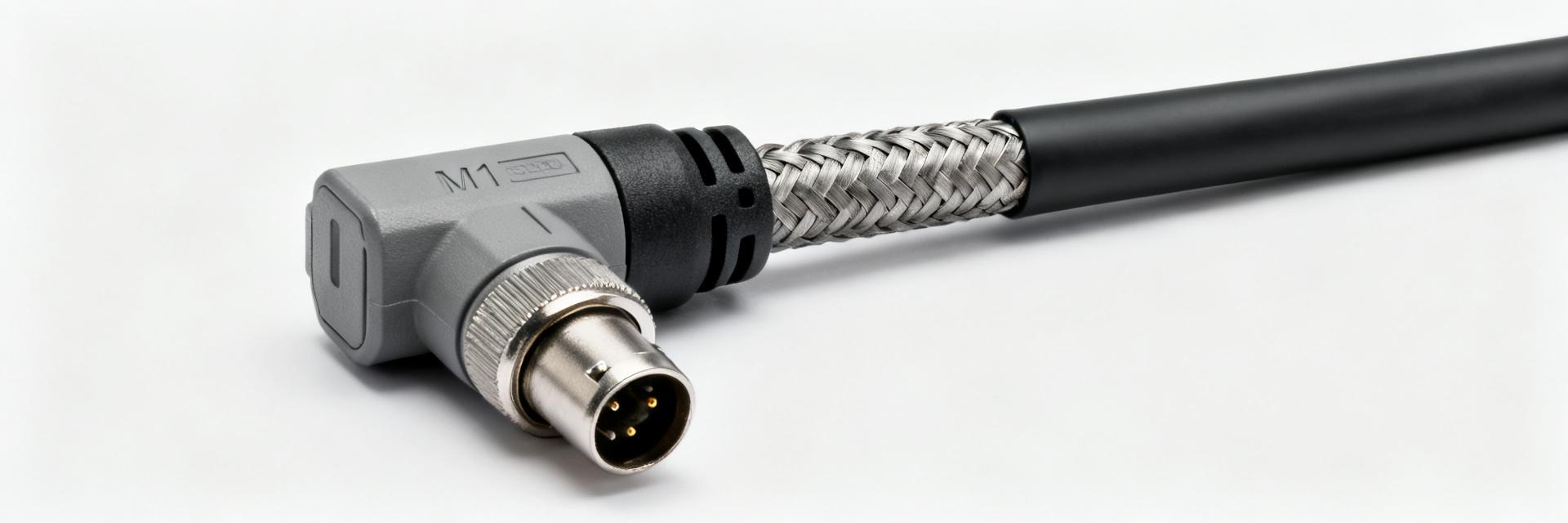
What this part number denotes
The part number 1682702 denotes a sensor/actuator cable with model code SAC-3P-M12MR: SAC = sensor/actuator cable family, 3P = three positions, M12MR = M12 right-angle male/female orientation as specified. Typical factory length is 5.0 m (16.4 ft) with a PUR jacket. Confirm exact datasheet values for conductor cross-section and ratings before procurement.
Quick spec snapshot (at-a-glance table)
Essential specs to capture when quoting or comparing: connector type (M12, right-angle), pin count (3), shielded (yes), jacket material (PUR), common length (5.0 m / 16.4 ft), and any referenced standard. Pull exact voltage/current, operating temperature, and IP rating from the datasheet for contract documents.
| Attribute | Typical Value (verify datasheet) |
|---|---|
| Connector | M12, right-angle, 3-position |
| Shield | Overall shield (foil/braid combination indicated on datasheet) |
| Jacket | PUR (Polyurethane), Halogen-free |
| Length | 5.0 m (16.4 ft) common option |
| Standards | Refer to datasheet for applicable IEC 61076-2-101 references |
2 — Shielding & cable construction (Data analysis)
Shield type, drain, and cable layers
The datasheet describes an overall shield; typical construction for this class is foil plus braided over a core, with a separate drain conductor available. This layered approach improves EMI rejection across a broad frequency band and provides a low-impedance path when the drain is tied to chassis ground at a single point to avoid ground loops.
Jacket, conductor, and environmental protections
Conductor count is three cores with insulation and a PUR outer jacket noted for oil and abrasion resistance. PUR commonly offers superior flex life in robotic and conveyor applications and often claims halogen-free or enhanced chemical resistance where specified. Compare attenuation and EMI tolerance numbers if available to justify specifying over unshielded options.
3 — Signal, wiring and pinout guidance (Method/guide)
Electrical wiring & pin assignment
For a 3-position M12 right-angle assembly, pin mapping follows the datasheet pin assignment; typical usage is pins 1, 2, 3 assigned to power/signal lines per controller convention. Reference the official pinout diagram for polarity and shield termination details; when preserving signal quality, terminate the shield to chassis or controller ground at one end only.
Installation best practices for signal integrity
Best practices include terminating the drain to ground at the controller end, maintaining minimum bend radius per datasheet, keeping the cable separated from large DC motor and power runs, torquing the M12 connector per spec, and using strain relief. Post-install tests should include continuity, shield continuity, insulation resistance, and basic noise checks against acceptance thresholds.
4 — Electrical & mechanical ratings (Data analysis)
Voltage, current, and temperature ratings
The datasheet lists the precise voltage, current, and operating temperature ranges applicable to continuous use; consult those exact values for derating calculations. If conductor cross-section is provided (e.g., mm² or AWG equivalent), perform an ampacity example calculation for a 3‑conductor run using the listed operating temperature and bundling factors.
Mechanical durability specs & certifications
Mechanical metrics to confirm on the datasheet include IP ingress rating, minimum flex cycles, tensile strength, and any stated approvals or standards. These figures determine suitability for robotic flexing, drag-chain service, or fixed runs and influence maintenance intervals and spare-part stocking strategies for automation deployments.
5 — Compliance, testing & performance metrics (Method/guide + Data)
EMC/EMI performance & immunity testing
Where provided, shield attenuation (dB) and referenced EMC test standards should be quoted from the datasheet. Interpret attenuation across frequency bands relevant to your environment; field validation steps include swept-frequency insertion-loss testing and practical immunity tests near noisy power electronics to validate claimed performance under system conditions.
Lifespan, warranty, and quality indicators
Look for MTBF, warranty terms, lot traceability, and manufacturing standards on the datasheet or certificate. Typical failure modes include jacket abrasion, conductor break at the connector solder joint, and shield discontinuity; ensure procurement specifies traceability and replacement lead time to minimize downtime risk in critical automation lines.
6 — Selection checklist & practical decisions (Actionable)
Choosing the right length, jacket, and connector orientation
Checklist: confirm length (5.0 m common), choose right-angle vs. straight M12 per connector access, select PUR for abrasion/oil exposure, and decide shielded vs unshielded by EMI risk. A simple decision matrix: use shielded cable when motors, VFDs, or long cable runs are present; unshielded may suffice in low-noise, short-distance sensor networks.
Procurement, installation tips & troubleshooting quick fixes
Procurement: verify datasheet revision and part labeling; do not rely on visual similarity. Troubleshooting: isolate ground loops by single-point shield grounding, swap suspected cable with a known-good shielded cable to confirm EMI sources, and retest continuity and insulation after connector reseating or replacement.
Summary
The 1682702 SAC-3P-M12MR is a shielded 3-position M12 right-angle cable commonly supplied as a 5.0 m PUR-jacket assembly; shielding, conductor construction, and mechanical ratings determine suitability for noisy industrial environments. Use the checklist and wiring/termination best practices above to preserve signal integrity and ensure compliance with your system requirements.
- Confirm the 5.0 m PUR-jacketed configuration and 3-position M12 form factor against the official datasheet before ordering; use shielded cable where EMI risk is present to protect signal integrity.
- Terminate the drain to chassis/controller ground at a single point and respect bend-radius and torque specs to reduce connector stress and signal degradation.
- Validate electrical ratings (voltage/current/temperature) and IP/flex-cycle claims from the datasheet to match the intended application and lifecycle plan.
7 — Frequently asked questions
What conductor size does 1682702 use and how does that affect ampacity?
The datasheet lists the conductor cross-section and insulating type; use that exact cross-section to compute ampacity per NEC/industry tables and apply temperature/bundling derating factors. For sensor/actuator classes, designers commonly find 3-conductor sizes adequate for low-current I/O but always confirm datasheet values for continuous-duty calculations.
How should I terminate the shield on the 1682702 in a mixed-signal cabinet?
Best practice is single-point grounding: connect the drain/shield to chassis or controller ground at one end only (typically the controller end) to avoid ground loops. Use shield termination clamps or drain-wire soldering per the datasheet recommendations and verify continuity with a low-resistance measurement after installation.
What tests validate that a 1682702 assembly is performing as specified after installation?
Post-install checks include conductor continuity, insulation resistance between conductors and shield, shield continuity to the termination point, and a basic noise/functional test under load. If possible, perform an EMI sweep or immunity test to compare against datasheet attenuation figures for final acceptance in noisy environments.
Why is the PUR jacket preferred over PVC for the SAC-3P-M12MR in industrial environments?
The PUR (polyurethane) outer jacket provides vastly superior mechanical abrasion resistance, oil resistance, and dynamic flexibility compared to standard PVC. It is ideal for robotic drag chains, exposure to machine coolants, and applications requiring halogen-free, high-flex lifespans.


