Point: Recent distributor inventory scans and industry sourcing reports show notable volatility for circular M12 sensor-actuator cable assemblies, with in-stock rates swinging and lead windows widening. Evidence: Aggregated availability snapshots indicate rapid shifts between immediate availability and constrained lead times. Explanation: This article delivers a concise specs snapshot for 1682689 and an actionable procurement checklist for US purchasing teams.
Point: The goal is to clarify what to expect for technical fit, typical stock behavior, and mitigation steps. Evidence: Guidance draws on official datasheet language and aggregated supplier availability signals. Explanation: Readers will get exact spec fields to verify, testing checks, stock-read interpretation, and fast actions to reduce delivery risk in factory automation programs.
(1) Product overview — what is the 1682689 sensor-actuator cable? (Background)
What this SKU represents
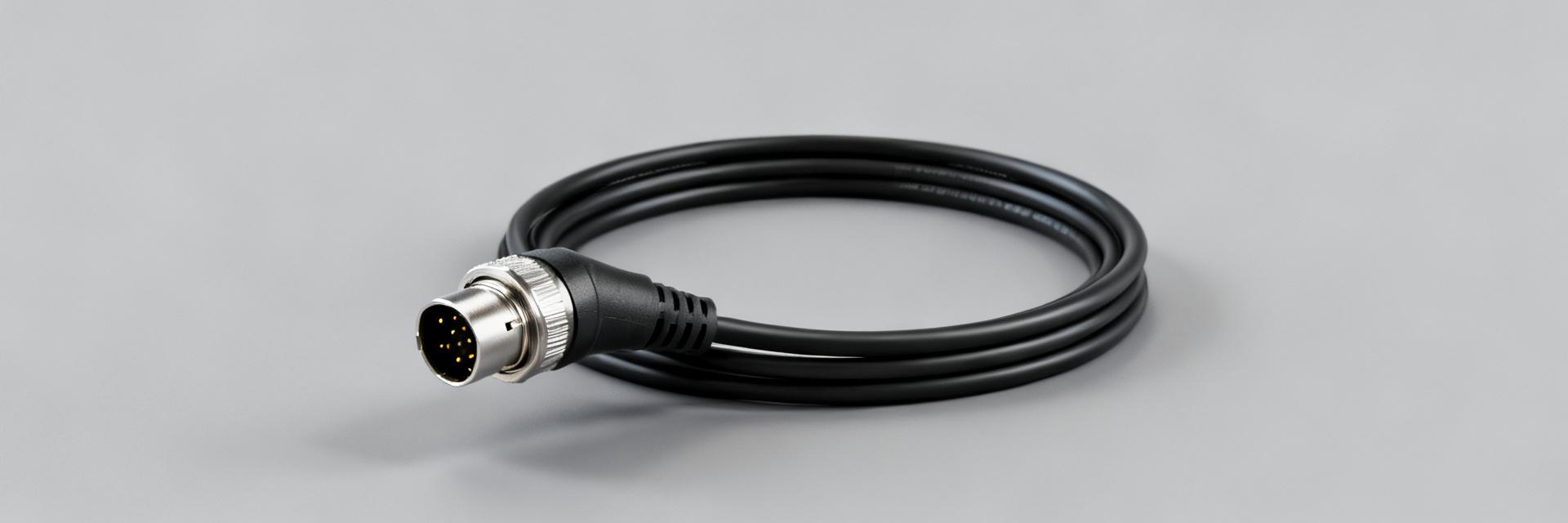
Point: This SKU denotes a circular M12 angled-male cable assembly commonly delivered as a 1.5 m, 3-position, shielded drop cable. Evidence: The official product literature lists an M12 A-coded angled male, three conductors, shielded construction, and a PUR halogen-free jacket. Explanation: Engineers use this assembly for direct sensor or actuator connections in automated machines where a compact right-angle mating is required.
Why engineers choose this cable
Point: Selection drivers are mechanical robustness, EMC protection, and industrial-grade jacket performance. Evidence: Specs cite M12 robust locking, braided shield or foil options, and PUR halogen-free jackets rated for industrial flex. Explanation: The combination reduces noise, survives abrasion and oil exposure, and simplifies spares strategy where a single standardized M12 3-pin assembly supports broad I/O devices.
(2) Key specifications at a glance (data analysis)
Electrical & mechanical specs to list
Point: Verify conductor count, AWG, voltage/current, contact coding, mating orientation, shielding type, jacket material, color, bend radius, and temperature range. Evidence: The datasheet provides explicit fields for number of positions, conductor AWG, rated voltage/current, A-coding, angled male orientation, PUR jacket, and bending radius. Explanation: Presenting these technical variables below allows procurement and engineering to confirm form-fit-function at a single glance.
| Technical Parameter | Specification Details |
|---|---|
| Connector Configuration | M12 Angled Male, A-Coded, 3-Position |
| Conductor & Gauge | 3-conductor, 0.34 mm² (AWG 22) |
| Shielding Structure | Shielded (braided copper/foil option) |
| Jacket Compound | PUR (Polyurethane), Halogen-free |
| Nominal Length | 1.5 meters |
| Electrical Ratings | 250 V AC/DC / 4 A nominal |
| Mechanical Lifespan | ≥ 100 mating cycles |
| Temperature Range | -25 °C to +90 °C (Flexible installation) |
Environmental & compliance highlights
Point: Confirm IP rating expectations, halogen-free claims, and relevant IEC connector family references. Evidence: Product specs typically show IP67 mating ratings, halogen-free PUR notation, and references to IEC connector standards. Explanation: Calling out "datasheet" and "specs" in procurement checks ensures that environmental sealing and safety certifications match installation and regulatory needs.
(3) Datasheet & testing insights — what to verify before you buy (data analysis)
Critical datasheet items to verify
Point: Key datasheet items are pinout/wiring diagram, mechanical drawings, termination on the free end, shield drain-wire details, and lifecycle/bend data. Evidence: Mis-specified coding, unspecified shielding, or incorrect lengths are common red flags in supplier docs. Explanation: Explicitly compare mechanical drawings and wiring diagrams to the application harness to avoid costly returns or onsite rewiring.
Performance testing & field reliability notes
Point: Request continuity, insulation resistance, shield continuity, and flex-cycle test evidence before acceptance. Evidence: Batch test reports or sampled flex-cycle data demonstrate expected life under repeated motion. Explanation: Ask suppliers for batch test certificates and note typical failure modes (broken conductor at termination or shield detachment) so you can specify reinforced terminations in critical runs.
(4) Stock & lead times: what to expect in the US market (data-driven / action)
Typical stock status & lead-time ranges (practical data)
Point: For this class of cable, expect three guidance bands: immediate to 2 weeks (available), 2–6 weeks (constrained), and 6+ weeks (long lead). Evidence: Recent availability scans show assemblies swing between these bands within weeks. Explanation: Treat this as guidance and always confirm live stock before committing; use the bands to set contingency plans and PO cadence.
How to interpret supplier availability messages
Point: Common availability terms include "in stock", "limited stock", "backordered", and quoted lead time. Evidence: Each status carries a recommended action—buy now, request allocation, or request a confirmed ship date. Explanation: When a long build is quoted, insist on a written confirmed ship date and consider partial shipments or allocation agreements to secure supply.
(5) Sourcing & procurement checklist — secure stock fast (method/action)
Fast actions to reduce delivery risk
Point: Immediate steps are placing firm POs with clear ship dates, requesting lot/traceability, and negotiating partial shipments or allocation. Evidence: Teams that secure partial shipments or local stocking agreements reduce line-down risk. Explanation: Maintain safety stock equivalent to 1–3 months of usage for single-sourced SKUs and document accepted alternates to accelerate approvals.
Alternatives, cross-references & last-resort options
Point: Build alternates by matching pin count, coding, connector orientation, shielding, and jacket material. Evidence: Acceptable alternates must be validated via mechanical drawings and pinouts; long-tail search phrases like "1682689 alternative sensor-actuator cable" can surface close matches. Explanation: Always verify drawings and run a small sample test on machine I/O before full acceptance of an alternate.
(6) Installation tips & real-world use cases (case)
Quick installation & wiring tips
Point: Route cables to minimize flex at the connector, terminate shields to ground at one end, and use strain reliefs. Evidence: Field practice and lifecycle testing show connector-side flex and poor shield terminations as frequent failure origins. Explanation: Follow bend radius guidance, secure the free cable end, and label runs to speed maintenance and reduce accidental disconnection.
Use cases that justify stock priorities
Point: Prioritize spares for conveyor sensor networks, actuator runs in packaging systems, and modular machine I/O standardized on one SKU. Evidence: Single-SKU spares reduce troubleshooting time and spare-part complexity during outages. Explanation: If the cable is single-sourced in the BOM, keep on-site spares equal to expected repair time times daily usage to avoid production impact.
Summary
- Clear specs snapshot: Verify conductor count, A-coding, angled M12 mating, PUR halogen-free jacket, shielding details, and mechanical drawings to confirm fit before purchase.
- Stock & lead guidance: Treat availability bands (immediate–2 weeks, 2–6 weeks, 6+ weeks) as planning gates and always request written ship dates for long builds.
- Procurement checklist: Place firm POs with allocation requests, keep 1–3 months safety stock for single-sourced lines, and validate alternates via pinouts and mechanical drawings.
Frequently asked questions
Is the 1682689 compatible with standard M12 A-coded sensors?
Most assemblies described in vendor datasheets use A-coding for three-position M12 connectors and are compatible with standard A-coded sensors when pinouts match. Verify the wiring diagram and mechanical drawing in the datasheet to confirm orientation and free-end termination before installation to prevent mismatches.
How should a sensor-actuator cable be tested on receipt?
On receipt, perform continuity checks for each conductor, measure insulation resistance, verify shield continuity, and inspect mechanical dimensions against the datasheet. For critical runs, request batch test reports or perform a short flex-cycle sample to confirm expected durability before deploying into production machines.
What does "stock" status mean and what action should procurement take?
Stock statuses indicate availability tiers: in stock (purchase immediately), limited stock (request allocation), backordered/lead time quoted (obtain confirmed ship date). Procurement should secure written ship dates for long builds, negotiate partial shipments, and maintain safety stock to mitigate supply swings.
What are the key mechanical and environmental advantages of this PUR halogen-free jacket?
The PUR halogen-free jacket offers mechanical robustness, oil and chemical resistance, and excellent performance in industrial flex-cycle runs. Combined with IP67 environmental sealing and robust M12 threaded locking, it ensures long-term reliability in harsh automated factory environments while producing minimal toxic gas in the event of fire.


