In industrial I/O deployments, selecting a shielded M12 sensor actuator cable with verified shielding and IP/temperature ratings can cut EMI-related faults by double-digit percentages compared with unshielded runs. This concise technical reference helps you evaluate the 1682663 sensor actuator cable: its core specs, physical dimensions, shield performance, environmental ratings and practical selection/installation guidance so you can validate fit-for-purpose performance before procurement.
The article focuses on measurable items you should check on the datasheet and in test reports: conductor size and current rating, outer diameter and bend-radius constraints, shield construction and recommended termination, and ingress/temperature classifications for machine and panel environments.
Product overview & key identification
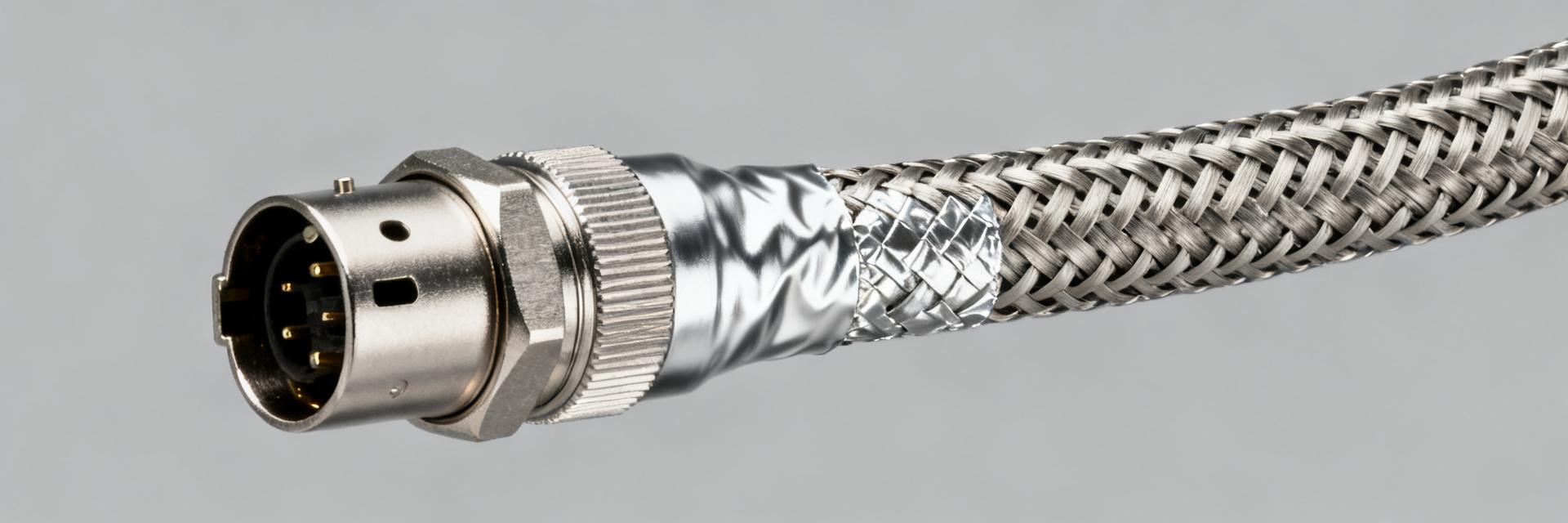
What the part number 1682663 represents
Point: The part number denotes a 3-pin M12-style sensor/actuator cordset in a pigtail (unterminated) configuration. Evidence: Typical product families use the M12 A-coding, 3-pole pinout for basic sensors and small actuators. Explanation: For selection you should treat the code as indicating connector style, three conductors, and a standard industrial jacket class—confirm conductor AWG and jacket material on the datasheet before specifying.
Quick specs snapshot
| Attribute | Value (typical) |
|---|---|
| Conductor count | 3 |
| Conductor size | 0.34 mm² (≈22 AWG) |
| Insulation | Polyethylene/PVC variant |
| Jacket | PUR, halogen-free |
| Overall Ø | ≈3.0 mm (0.12 in) |
| Typical lengths | 0.3–10 m |
| Connector | M12 A-code, 3-pin |
| Termination | Pigtail / unterminated |
| Shielding | Shielded (foil + braid typical) |
| Bending radius | Static ≥ 10×OD; Dynamic ≥ 15×OD |
| Temp. range | −25 °C … +85 °C |
| IP rating | IP67 when mated (cordset) |
| Standards | IEC 61076-2-101 (M12) |
Mechanical dimensions & installation constraints
Cable and connector dimensions to document
Point: Document exact overall diameter, conductor insulation Ø, connector body length and thread details for panel clearance. Evidence: The listed Ø ≈3.0 mm (0.12 in) and M12 thread (12 mm) are typical; manufacturers publish drawing tolerances. Explanation: Include a side and cross-section diagram showing OD in mm and inches, conductor pitch and thread length, and specify tolerances (±0.1 mm) so mating clearance and panel cutouts are foolproof in designs.
Installation constraints: bend radius, flex cycles, and strain relief
Point: Respect static and dynamic bend radii and expected flex life to avoid premature failure. Evidence: Recommended static ≥10×OD and dynamic ≥15×OD; continuous-flex applications often require specially rated PUR jackets. Explanation: For routing, use clamps at 5–10×OD spacing, plan strain relief at the connector exit, and request flex-cycle tests from suppliers if the cable will run in a drag-chain or robotic arm to quantify service life.
Electrical specs & shielded performance
Electrical ratings and conductors
Point: Verify conductor cross-section and current/voltage ratings to ensure safe power or I/O transmission. Evidence: 0.34 mm² (≈22 AWG) conductors typically carry ~2–4 A depending on ambient and bundling; voltage classes for sensor cables can be 60 V to several hundred volts insulation class. Explanation: Use the datasheet resistance (ohm/km) to calculate voltage drop for long runs and specify fusing or short-circuit protection aligned with actuator load and cable ampacity.
Shield type, shielding effectiveness and EMI considerations
Point: Confirm shield construction and measurable effectiveness rather than assume protection. Evidence: Shielded cables usually combine an aluminum foil with a tinned-copper braid for >85% coverage; practical performance is best validated by transfer-impedance or dB attenuation data. Explanation: For field use, ground the drain conductor at one end (instrument or cabinet side), avoid floating shields on both ends to reduce ground-loop noise, and request shielding tests (continuity, HIPOT and SE measurements) when EMI risk is high.
Environmental & compliance ratings
Temperature, chemical resistance, and jacket properties
Point: Confirm operating and storage limits plus chemical and abrasion resistance needed for the installation. Evidence: PUR jackets are noted for oil, ozone and abrasion resistance and are commonly specified for machine-tool environments. Explanation: Specify jacket compound verified for coolant and cleaning agents used on your line, derate temperature limits in enclosed cabinets, and request chemical-compatibility charts from the vendor if exposure is expected.
Ingress protection, flame & safety standards, and regulatory notes
Point: Verify IP ratings and any flame/halogen declarations required by site rules. Evidence: Assembled cordsets with M12 mates frequently achieve IP67; halogen-free and certain flame classes are declared by material data. Explanation: For outdoor or wash-down applications demand UV and IP67/IP68 data, and ask for EMC directives conformity or test reports when the cable is part of a certified control cabinet.
Selection, application examples & practical checklist
Typical application scenarios & matching criteria
Point: Match the cable to the motion, environment and signal type for reliable operation. Evidence: Use cases include proximity sensors on an assembly line, small valve actuators on packaging equipment and distributed I/O on conveyors where bending and EMI risk vary. Explanation: For moving sensors choose dynamic-rated PUR jackets and a longer flex life spec; for electrically noisy areas prioritize braided shielding and secure termination to cabinet ground.
Quick selection & installation checklist
- Confirm pinout and length required; verify conductor AWG and current rating against actuator load.
- Check shield construction and plan single-end grounding of the drain conductor to avoid ground loops.
- Verify temperature, chemical compatibility and IP rating for the intended environment.
- Plan bend radius, strain relief and clamp spacing; request flex-cycle test data for continuous motion.
- When EMI is critical, request shield transfer-impedance or shielding effectiveness test reports.
Summary
- The 1682663 identifies a 3-pin M12 pigtail sensor actuator cable with a PUR jacket and shielded construction suitable for industrial I/O; verify conductor size and current rating before use.
- Key installation precautions: terminate shield to a single ground point, respect static and dynamic bend radii (≥10–15×OD), and use proper strain relief and clamp spacing to extend service life.
- Environmental checks: confirm IP67 mating rating, jacket chemical compatibility and any flame/halogen declarations; request datasheet and shielding test reports prior to procurement.
Common questions
How do I verify the sensor actuator cable is truly shielded?
Measure shield continuity along the length and request manufacturer shielding effectiveness data (transfer impedance / dB attenuation across relevant frequencies). Evidence from continuity checks plus test reports gives practical assurance; if in doubt, perform an on-site EMI susceptibility test with the installed cable routing.
Can this sensor actuator cable carry power for small actuators?
Yes, but confirm conductor cross-section and ampacity versus actuator stall/current draw. Use datasheet resistance to calculate voltage drop for long runs and add overcurrent protection sized to conductor ampacity to prevent overheating during faults.
What are the best shield termination practices for preventing ground loops?
Terminate the drain conductor to chassis or cabinet ground at one end only (instrument or cabinet side) and avoid tying the shield to signal ground at the field device. Use a single, low-impedance ground point and maintain consistent grounding practices across connected equipment.
What are the bend radius limits for static vs dynamic installations?
For static installations, the minimum bending radius is 10 times the outer diameter (≥10×OD). For dynamic or flexing applications, it is 15 times the outer diameter (≥15×OD). Continuous-flex applications should utilize dynamic-rated PUR jackets and proper strain relief.


