Two open-source findings frame this capability-focused report: imagery and reporting indicate AK-306 installations adapted to land vehicles and fixed emplacements, and multiple unclassified sources report an advertised cyclic rate in the multi-thousands of rounds per minute class with practical sustained bursts constrained by heat. Reported effective engagement bands cluster around close-in ranges—roughly 1,000–2,000 meters for soft or small aerial targets—while field observations show counter-UAS deployments in littoral and expeditionary contexts. This AK-306 performance report aims to quantify performance, benchmark peers, and provide actionable deployment and testing recommendations for US-aligned operators.
The analysis uses open-source technical summaries and OSINT firing/imagery analysis to separate verified figures from field estimates, with an operational emphasis: what a procurement, integration, or engineering team needs to know to evaluate a 30mm autocannon for counter‑UAS, littoral patrol, or short-range surface engagement roles.
Background & System Role
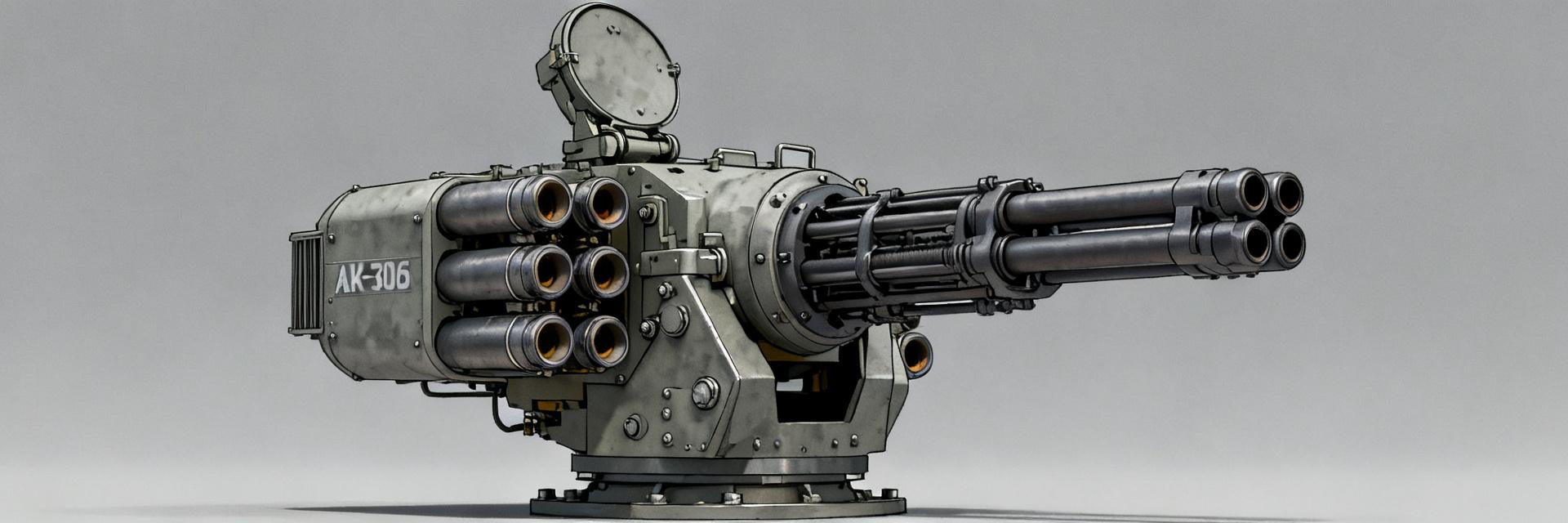
1.1 System lineage and intended roles
Point: The AK-306 traces to naval close-in and light-ship gun families adapted for multi-role defense. Evidence from equipment guides and defense reporting lists it as a six-barrel rotary 30mm mount intended for CIWS-like short-range tasks and counter-drone roles. Explanation: The six-barrel configuration prioritizes high cyclic volume from a compact naval footprint; typical magazine capacities reported in open sources vary but are modest compared with larger naval systems, reflecting a design trade toward weight and space savings on small ships or vehicle mounts.
1.2 Operational contexts and mission profiles
Point: Operators select 30mm autocannons for engagements where rapid volume and fragmentation are decisive under 1–2 km. Evidence: OSINT and reporting show AK-306 use-cases in anti-drone, littoral interdiction, and short-range surface engagements. Explanation: Three use-cases—(1) counter-UAS: rapid short bursts for swarm suppression; (2) patrol vessel self-defense: quick interdiction of fast small craft; (3) static coastal point defense: low-cost area denial—each implies specific logistics and sensor fusion needs for effective employment.
Design & Technical Specifications (data-first)
2.1 Mechanical design and core specs to report
Point: Key specs to record include caliber, barrel count, cyclic vs sustainable RoF, muzzle velocity, system weight, feed capacity, power draw, and stabilization interfaces. Evidence: Open technical guides and equipment catalogs classify the system as a 30mm, six-barrel rotary autocannon with muzzle velocities typical of 30mm ammunition (high hundreds to ~1,000 m/s depending on round). Explanation: Present these in a specs table for direct comparison; note that open figures for cyclic RoF describe high theoretical volumes while sustainable fire is limited by thermal and feed constraints.
| Parameter | Representative Value / Note |
|---|---|
| Caliber | 30 mm |
| Barrel count | 6-barrel rotary |
| Cyclic rate | Multi‑thousand rpm (advertised); practical sustained lower |
| Muzzle velocity | ~800–1,000 m/s (round dependent) |
| System weight | Light naval class (vehicle-adaptable) |
| Feed / magazine | Medium capacity drums / linked feed; platform-dependent |
| Interfaces | Radar/EO/IR fire-control integration, basic stabilization |
2.2 Built-for-purpose trade-offs and reliability indicators
Point: Lightweight naval adaptations trade cooling, armor, and ammunition volume for reduced mass and footprint. Evidence: Multiple field reports and conversion notes describe land mounts prioritizing mobility over sustained thermal capacity. Explanation: Procurement should request MTBS (mean time between stoppages), recorded test-burst heat curves, and feed-jam statistics; common failure modes to watch are overheating under prolonged bursts and feed/feed-tower failures with non-standard ammunition links.
Empirical Performance: Rate of Fire, Accuracy & Engagement Envelope
3.1 Measured/claimed rate of fire and burst characteristics
Point: Distinguish cyclic versus sustainable RoF and define recommended burst lengths for heat control. Evidence: Advertised cyclic figures must be tempered by OSINT timing of firing footage and test notes showing practical bursts of tens to low hundreds of rounds with cooldown intervals. Explanation: Recommend documenting RoF vs. time curves during acceptance testing and implementing burst controls (e.g., 5–20 round programmable bursts) to manage barrel heat and motor load while preserving accuracy and barrel life.
3.2 Accuracy, effective range and hit probability modeling
Point: Effective engagement envelope must be modeled as a function of sensor quality, stabilization, ammunition, and target type. Evidence: Simple P(hit) models using observed dispersion and stabilization data suggest high P(hit) <500 m for small UAS, decreasing toward 1–2 km for maneuvering targets. Explanation: Propose a test protocol to validate: instrumented range trials at 250 m, 500 m, 1,000 m with representative targets, environmental logging, and optical tracking to generate empirical P(hit) tables for baseline procurement comparison.
Ammunition Types & Terminal Effects
4.1 Common 30mm rounds and trade-offs
Point: Typical payloads include HEI, AP, programmable airburst, and proximity-fuzed rounds with distinct terminal effects. Evidence: Ammunition surveys show HEI delivers fragmentation and overpressure effective against UAS and soft craft, while AP is needed against light armor. Explanation: Match round selection to target sets—HEI for swarm and soft targets, AP for light-armor interdiction—and record muzzle energy and fragmentation radius during qualification to inform engagement doctrine.
4.2 Logistical and safety considerations
Point: Ammunition logistics, cook-off risk, and training round availability are critical sustainment factors. Evidence: Field adaptations have constrained magazine volumes and exposed crews to handling risk in austere mounts. Explanation: Provide a procurement checklist covering magazine layout, inert training rounds, temperature-controlled storage, and tracer visibility management for night operations.
Integration, Mounting & Maintenance Guide (practical how-to)
5.1 Platform integration considerations
Point: Integration requires mechanical, power, cooling, and sensor interfaces to be validated prior to acceptance. Evidence: Vehicle and small-ship adaptions observed in OSINT required reinforced mounts, dedicated power converters, and integration with local C2/EO systems. Explanation: Use a pre-integration checklist: structural hardpoints, recoil path clearance, power availability (continuous and peak), RF/line-of-sight for sensors, and magazine access for reloads.
5.2 Maintenance, throughput and sustainment planning
Point: Plan spare parts and predictable maintenance intervals to sustain high-tempo operations. Evidence: Rotary systems demand barrel and feed-component spares and scheduled motor maintenance. Explanation: Recommend daily visual checks, weekly functional runs, monthly bore inspections, and stocking barrels, feed gears, and servomotors; estimate rounds-per-day sustainment based on intended mission tempo and heat-management capacity.
Comparative Benchmarks vs Other 30mm Systems (data-driven)
6.1 Key performance comparisons
Point: Benchmark against peers on RoF, effective range, weight, and ammo capacity. Evidence: Public equipment matrices and field reports allow generic comparator tables that show trade-offs between cyclic volume and sustained endurance. Explanation: Present a concise comparison table during procurement, and consider a radar chart to visualize strengths—volume of fire, mobility, sustainment, and integration complexity.
6.2 Cost, logistics and mission fit assessment
Point: Decision rules-of-thumb: choose AK-306-like systems where high short-term volume and platform compactness matter; choose alternative 30mm options where sustained fire and larger magazines are primary. Evidence: Operational profiles and logistical footprints from recent deployments support this guidance. Explanation: Procurement officers should score mission needs across volume, endurance, and supply-chain compatibility before final selection.
Field Adaptations, Recent Deployments & Tactical Recommendations
7.1 Recent operational adaptations and OSINT observations
Point: Recent imagery shows naval guns repurposed for land emplacements and vehicle mounts in counter-UAS roles. Evidence: Analysis of imagery and deployment footage indicates altered mounting, magazine routing, and sensor pairings. Explanation: Verification steps include imagery timestamping, shot-sequence timing analysis, and impact-pattern assessment to validate claimed performance in theater.
7.2 Tactical recommendations & actionable next steps for US-aligned operators
Point: Prioritize endurance and integration trials before fielding. Evidence: Open testing shortfalls typically arise from thermal limits and incompatible ammunition feeds. Explanation: Run a prioritized test program—endurance trials at 300/600/1,000-round milestones, integration trials with local fire-control suites, and a training syllabus for crews—then follow with an operational checklist for limited deployments.
Key Summary
- AK-306 profile: a compact six-barrel 30mm autocannon optimized for high cyclic volume at short ranges; best-suited for counter‑UAS and close-in maritime defense when paired with capable sensors.
- Performance priorities: verify RoF vs sustained time curves, P(hit) at representative ranges, and ammunition effects through instrumented live-fire trials before procurement.
- Integration & sustainment: ensure reinforced mounts, dedicated power/cooling, spare-barrel and feed-part inventories, and a documented maintenance schedule to support operational tempo.
Frequently Asked Questions
What is the typical effective range for an AK-306 or similar 30mm autocannon?
For small aerial targets and soft surface threats, the practical effective engagement band is commonly within 1,000–2,000 meters, with highest probability-of-hit under 500–1,000 meters when paired with modern EO/IR stabilization and proper ammunition.
How should a force validate AK-306 rate-of-fire and thermal limits?
Run controlled endurance trials with instrumented temperature and barrel-wear monitoring: staged bursts (e.g., 5, 20, 100 rounds) with systematic cooldown intervals and recorded motor/load metrics to produce RoF-vs-time curves and MTBS estimates suitable for doctrine.
What procurement checklist items are essential for deploying a 30mm autocannon in counter‑UAS roles?
Key items: validated feed compatibility with chosen ammo, integrated sensor/fire-control trials, spare-barrel and motor stocks, thermal management plan, training rounds and syllabus, and clear rules for burst lengths and engagement windows to mitigate heat and safety risks.
What are the key integration power and structural interface requirements for the AK-306?
Integration requires reinforcing structural hardpoints to manage recoil path clearance, ensuring continuous and peak power availability for the motor drive, verifying line-of-sight/RF alignment for local EO/radar sensors, and maintaining secure, accessible magazine corridors.
Summary: The AK-306 offers high short‑range volume and compact integration advantages for littoral and counter‑UAS missions; prioritize empirical RoF, P(hit) tests, and integration trials before operational adoption. Next steps: commission instrumented live‑fire trials, assemble a comparator matrix, and brief stakeholders on logistics and sustainment. The findings will inform whether a 30mm autocannon meets mission requirements or if an alternative 30mm solution is preferable.


