California’s public-records system processes large volumes of filings and requests across diverse jurisdictions, producing a dense mix of classification schemes and index codes that shape access and retrieval. For researchers and requesters navigating this landscape, understanding California record codes is essential: it speeds searches, clarifies fees, and reduces follow-up. Practical decoding saves time and clarifies provenance.
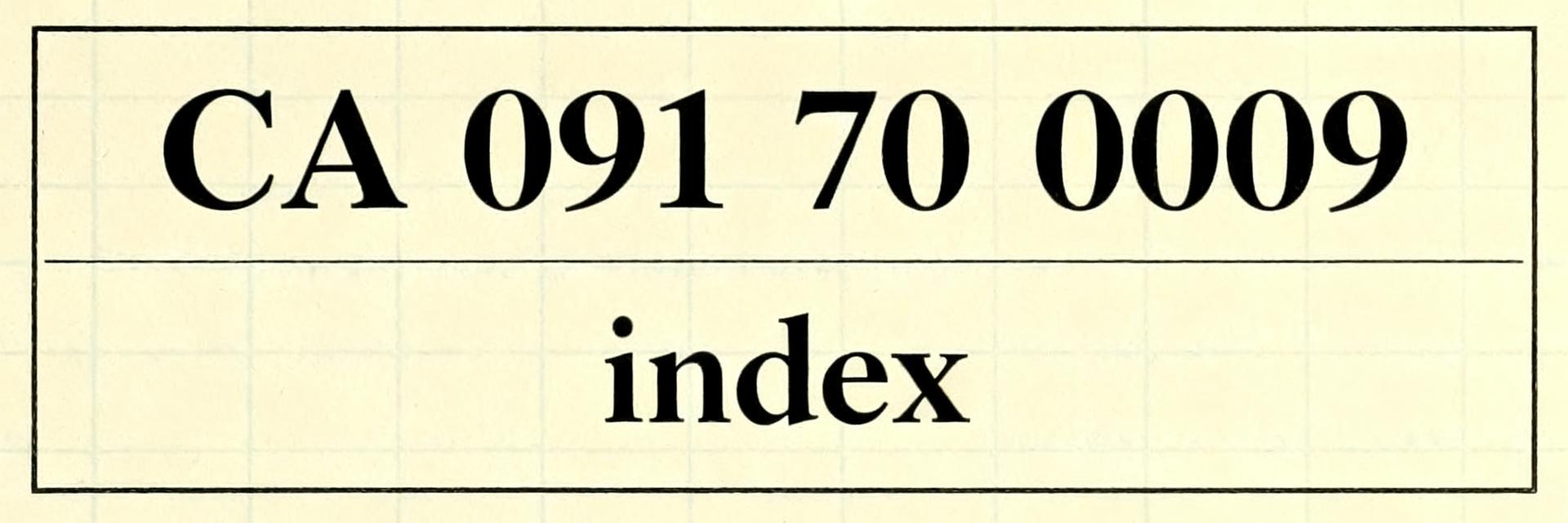
Common index entries range from deed and lien notations to court docket identifiers, and specific strings such as CA 091 70 0009 can appear in index fields or instrument references. This guide explains where codes come from, which sources to consult, and how to turn an index string into a retrievable public record without guesswork or unnecessary cost.
Overview: What California Record Codes Are and Why They Matter
1.1 Legal foundation and governing frameworks
Record codes in California arise from statutory frameworks like the California Public Records Act and county recorder procedures that require consistent indexing, retention, and fee schedules. Codes support indexing, searchability, and records management; they map legal instruments to retrieval systems and often reflect local administrative rules and state metadata guidance used for long-term preservation and access.
1.2 Who uses these codes — agencies and audiences
Users include county recorders, court clerks, title professionals, journalists, researchers, and routine public requesters. Agencies rely on codes to route requests and calculate fees; outside users use them to pinpoint filings. Identifying authoritative sources helps each audience: agencies publish code tables, while requesters reference those sources when seeking specific public records to avoid ambiguity.
Primary Sources of California Record Codes
2.1 State-level sources: statutes, state archives, and model administrative codes
Authoritative code lists originate at the state level: statutes, Secretary of State guidance, and state archives metadata standards define many record types and retention obligations. When verifying a code, prioritize state statutes and archives documentation as primary sources to confirm legal definitions, retention schedules, and any statewide crosswalks that help translate local abbreviations into standard categories.
2.2 Local sources: county recorders, court clerks, and municipal repositories
Counties and cities maintain local code tables and electronic portals; recorder offices and court clerk pages often publish code lists or searchable indexes. These local sources reflect jurisdictional variations in naming, abbreviations, and docketing practice. For targeted retrieval of public records, always consult the local recorder or court repository and use their published index or lookup tools.
Data & Stats: How Record Codes Break Down Across California
3.1 Volume, distribution, and common code categories
Typical categories include deeds, liens, UCC filings, court dockets, and vital records; urban counties usually show higher absolute volumes while some rural counties exhibit higher proportional variance by category. To quantify distribution, use county recorder annual reports and state open-data inventories as primary datasets that list counts by document type and provide the empirical basis for frequency analysis.
| Code Category | Primary Authority | Estimated Volume Share | Standard Format Example |
|---|---|---|---|
| Property Deeds | County Recorders | 40% - 45% | YYYY-NNNNNNN |
| Tax & Mechanics Liens | State Franchise Tax Board / Counties | 20% - 25% | TX-YYYY-NNNN |
| Court Dockets | Superior Court Clerks | 15% - 20% | YY-CC-NNNNNN |
| UCC Filings | Secretary of State | 5% - 10% | UCC-YYYY-NNN |
| Vital Records | Dept. of Public Health / Counties | 5% - 8% | VR-CO-NNNNN |
3.2 Trends and what the data implies for requesters and researchers
Trends show increasing digitization and gradual alignment of code schemes, though variability persists. For public records requesters this implies better searchability in many jurisdictions but the continuing need to verify local code lists and anticipate differing fee structures and processing times. Planning searches around common categories reduces iterations and clarifies retrieval timelines.
How to Decode and Use California Record Codes (Practical Guide)
4.1 Step-by-step: identify the code, locate the authoritative source, map to document type
Workflow: capture the full code string from the index, search the county or state code table, confirm the mapped document type and date range, then submit a scoped request or download. If a string like CA 091 70 0009 appears, match its segments against published crosswalks and confirm the instrument type before requesting to minimize fees and processing delays.
4.2 Tools, search tips, and common pitfalls
Search tips include using exact-code queries, trying alternate naming conventions, and checking published crosswalks. Pitfalls to avoid are relying on outdated local lists, misreading segment positions, and assuming uniform codes across counties. Keep notes on successful queries and record the source table used so you can reproduce results or support an appeal if access is delayed.
Common Codes & Example Interpretations (Case-style walkthroughs)
5.1 Typical code examples explained (deeds, liens, UCCs, court docket codes)
Example: an index entry segmented into county prefix, document class, and sequence number can be read left-to-right to reveal instrument type and recorded date. For instance, a multi-part code may indicate recorder office (county prefix), instrument (deed vs. lien), and order; cross-referencing local code tables confirms whether retrieval is digital or requires microfiche request.
5.2 When codes don’t match — escalation and verification steps
If a lookup fails, escalate to the county recorder or court clerk with the captured index string and a succinct request for the authoritative interpretation. If that does not resolve the issue, file a records request under the CPRA-style language requesting the definition or crosswalk for the listed code, and consult archival finding aids for historical or legacy code systems.
Actionable Checklist: Requests, Compliance, and Next Steps for Researchers & Agencies
6.1 Checklist for public-requesters: phrasing, required fields, and follow-up
- Identify target jurisdiction & exact code sequence.
- Cite California Public Records Act (CPRA) if requesting state/local agency records.
- Incorporate known variables: Date range, party names, and document category.
- Request electronic formats to eliminate physical processing fees.
- Track response times closely (10-day determination window under CPRA).
6.2 Checklist for agencies: publishing master code lists and improving discoverability
- Provide complete, machine-readable code tables (CSV/JSON formats preferred).
- Include documented crosswalks between internal system codes and state-wide definitions.
- Maintain clear visual guides mapping code fields for end-users.
- Publish an updated FAQ page detailing local exceptions and legacy systems.
Summary (conclusion)
California record codes are the indexing shorthand that unlocks instrumental public records across jurisdictions; identifying authoritative sources and applying a consistent decoding workflow significantly improves retrieval speed and reduces fees. Trends toward digitization help, but local variation remains common, so always consult county tables and confirm mappings before filing requests.
- Master the workflow: capture the code, consult county/state sources, confirm type, then request; this reduces uncertainty when seeking public records.
- Use published sources: prioritize state statutes and county recorder code tables as authoritative sources for interpreting entries like CA 091 70 0009.
- Prepare requests carefully: include exact code strings, date ranges, and jurisdiction to minimize delays and fees when retrieving California record codes-linked documents.
FAQ
What are California record codes and why do they matter?
California record codes are structured index strings used by recorders and courts to classify filings and instruments. They matter because they map a brief code to a document type and location, enabling precise searches. Using the correct code shortens retrieval time, clarifies fees, and helps locate the authoritative source for the desired public records.
How can I read California record codes if I only have an index entry?
Start by capturing the full string, jurisdiction, and any adjacent metadata. Then consult the county recorder or state code tables (sources) for a crosswalk. If the code is unfamiliar, request the recorder’s interpretation in writing and ask for the machine-readable list or cross-reference that defines the segments for reliable retrieval.
What should I do if a code like CA 091 70 0009 returns no matches?
If a direct lookup fails, contact the county recorder or court clerk with the exact code and ask for the authoritative definition. If necessary, file a formal public records request asking for the instrument associated with that code or the recorder’s code crosswalk. Document responses to support any subsequent appeals or follow-ups.
Where can I access the master lists of these indexing systems?
Master lists are typically published by county recorder offices, local court clerks, or the California Secretary of State's office. You can access them via official portal download directories, local records databases, or by submitting a formal information request under the CPRA.


